What Sets Premium Diecast Aluminium Enclosures Apart From The Rest
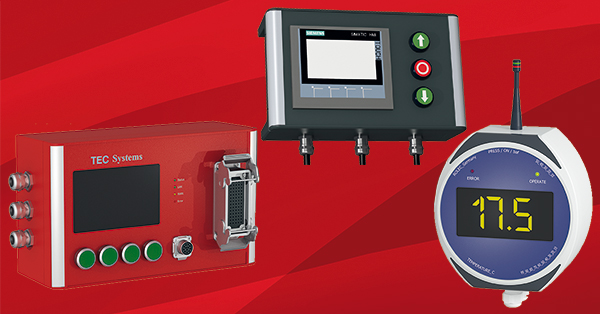
SMARTER, TOUGHER, BETTER DESIGNED
Great diecast aluminium enclosures must be versatile all-rounders that can be installed anywhere – but premium housings must be even better still. They must be excellent in ways that are both obvious and subtle.
But what is it that makes these enclosures special? What sets them apart from the herd? To some, many diecast aluminium housings look broadly similar. But look closer and you’ll see that premium enclosures are visibly different – with technical nuances that can have a very real bearing on the survival of your electronics in challenging industrial settings.
DIECAST ALUMINIUM vs PLASTIC vs GRP
To understand why premium enclosures are designed the way they are, it’s important to assess the threats they must face. After all, some of these enclosures may have to cope with impact and the threat of water and dust ingress on a daily basis.
Coping with all this means eliminating any weak points in an enclosure – both through the choice of materials, and via clever design features that can make all the difference when the going gets tough.
Let’s start with the material: diecast aluminium is strong, lightweight and corrosion-resistant. It offers superior mechanical strength and durability to GRP and plastic (though advanced thermoplastics are being used in industrial applications thanks to their strength and UV stability).
Cast aluminium also has better heat dissipation properties than plastic and GRP. This is essential for applications in which thermal management is critical. Plastic enclosures may deform or degrade at higher temperatures. GRP can withstand the heat but may not dissipate it as effectively as aluminium.
Aluminium also resists a wide range of chemicals including acids, alkaline solutions, organic solvents, petroleum products and non-oxidising salts – though GRP can be a better choice in highly corrosive environments, or where weight reduction is a priority.
EXCELLENT INGRESS PROTECTION
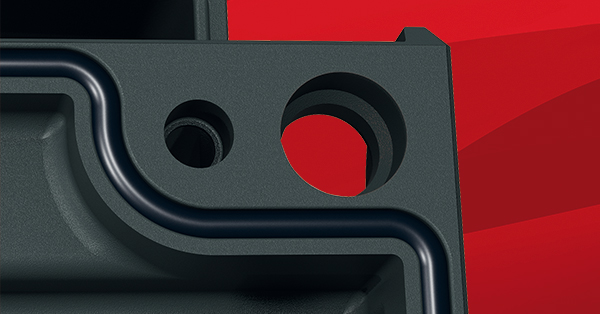
High levels of ingress protection are absolutely vital. IP 66 is the minimum recommended protection rating for industrial electronic enclosures. The first digit indicates protection against dust, while the second describes water resistance. IP 66 enclosures are completely dust-tight, with protection against temporary flooding (such as in high seas).
IP 67 enclosures must be able to withstand immersion (150 mm to 1 metre) for at least 30 minutes. IP 68 builds on this by offering protection against immersion to an agreed depth and duration greater than specified for IP 67. In the case of our aluDOOR hinged-lid enclosures, the IP 68 rating is to 1.2 m for two hours. For the record, aluDOOR is also rated to IP 66, IP 67 and IP 69K.
The latter rating confirms a high degree of protection. IP 69K enclosures can cope with high pressure water jets and steam cleaning. IP 69K is the IP rating to specify for food processing, chemicals, agriculture, auto manufacturing and any other applications where high-temperature, high-pressure washdowns are a regular occurrence.
But all that ingress protection means little if the enclosure has to be opened at any point – perhaps for installation, removal or maintenance. The lid doesn’t have to be off for long for wind-blown rain or other moisture to damage sensitive electronics.
The solution is ‘lid closed’ installation, a feature on aluDOOR and aluCASE (IP 66, IP 67, IP 69K) diecast housings. Separate channels for the lid and mounting screws mean the enclosures can be closed and sealed in a dry location before being installed in a wet one. Smart covers hide all the screws, and the lid is recessed to accommodate a membrane keypad (though aluDOOR can also be specified without this recess).
‘Lid closed’ installation and concealed fixings are also standard features on our aluDISC (IP 66, IP 67, IP 69K) round-style enclosures. The circular operating area and long curved sides give these housings a very ‘round’ look and feel but they retain two short flat sides for cable glands. Elegant aluDISC is proof that you don’t have to sacrifice aesthetics for performance; they look great on pipework and in other similar settings.
ADVANCED LID HINGES
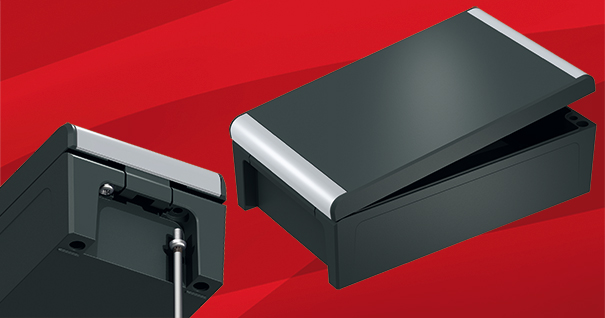
Lid hinges are a popular option for industrial electronic enclosures. They keep the lid secure when it’s open. This is especially important when the enclosure is being installed or opened at height or over water. Nobody wants to drop the lid in those circumstances. Aside from the loss of the lid, it leaves the electronics vulnerable to possible damage.
Plastic retaining straps are a cost-effective solution: they stop the lid from falling when it is open. But a premium enclosure will often offer something better in the form of integrated hinges. However, not all hinges are made equal: the ones on aluDOOR have been designed to withstand extreme conditions. A2 stainless steel lid screws and threaded inserts ensure a corrosion-resistant assembly. The lid is secured with tamperproof Torx screws. It opens 100° to allow easier access to the electronics.
PREMIUM DIECAST ENCLOSURES WITH BUILT-IN EMC SHIELDING
It’s easy to assume that any aluminium enclosure will automatically be safe from electromagnetic interference simply because it is metal, rather than plastic. But the waterproof gasket in a metal enclosure can be a weak point that allows EMI and/or RFI to enter or escape.
Traditionally, the answer has been to use an EMC gasket but this is not ideal. These gaskets are usually manufactured from a fine latticework of wire. Unfortunately, this makes them fiddly, fragile and costly to replace. Regular opening and closing of the lid during servicing and maintenance can shorten the life of these gaskets significantly – with the inherent risk of EMI/RFI.
Fortunately, there is now a better option. Enclosures such as conFORM (IP 66, IP 67) and conTROL (IP 66, IP 67) have dispensed with EMC gaskets completely. Instead, these enclosures have a ‘tooth and rail’ system which ensures continuous contact between base and lid.
Each model has unpainted teeth pre-cast into the bottom section and an uncoated contact rail inside the lid. The teeth bite into the lid rail when the enclosure is screwed shut – ensuring metal-to-metal contact and providing the consistent conductivity needed for reliable EMC shielding. This simple but highly effective system does not compromise the ingress protection offered by the lid seal in the lid, thanks to separate contact and sealing levels.
SPECIFY FULLY CUSTOMISED DIECAST ENCLOSURES
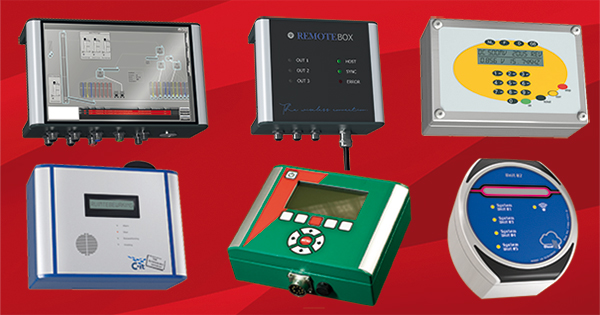
ROLEC enclosures can be specified fully customised to your exact requirements. This means they go directly from your Goods In to your production line for faster installation of PCBs and other components – ultimately enabling you to ship your products to customers more quickly.
Customisation services at ROLEC include CNC machining, engraving, powder coating, painting, photo-quality printing of legends, logos and graphics, EMC shielding, display windows and assembly of accessories.
GET EXPERT TECHNICAL ADVICE ON PREMIUM DIECAST ENCLOSURES
Contact us for more advice on how to specify the best diecast aluminium enclosures for your industrial electronics. Ask us about customisation – and don’t forget to request a sample.